
Owner
- A replacement scope that lists every layer removed, kept, and added
- One membrane system across the roof, with its seams and edges documented
- Drains and crickets reset so water leaves before it freezes at the edge

As a State College commercial roofing contractor, we replace and install TPO, EPDM, industrial, and metal roofs, starting with a walk of your roof and its drains.
State College commercial roofing work usually begins with something seen indoors. Each row pairs a sign inside the building with the roof detail we check first.
Rings that grow after rain point to water traveling under the membrane before it drops through a joint in the deck.
Lap edges lift where a seam weld or splice tape lets go, and rain runs along the lap to the nearest deck flute.
Thick ice along the eaves in January means meltwater is backing up instead of leaving the roof at the edge.
Leaf mats, sunken drain bowls, and frozen scuppers hold water against flashing that was never meant to sit underwater.
A wet floor under a rooftop unit after storms often traces to the curb, the condensate line, or a cracked counterflashing.
Equipment curbs and pipe boots move with every service visit, so their flashing splits long before the field membrane wears out.
Offices with musty corners or frost lines on interior walls can have wet insulation under a roof that looks dry from above.
Board that soaked up water loses its insulating value and rots fasteners, so it gets cored, mapped, and replaced.
Streaks down the inside of a brick parapet wall usually start at the coping or the counterflashing above the roof line.
Gaps at coping joints and cracked mortar behind the flashing let snowmelt soak the wall from the top down.
A new roof changes daily life for more than the owner. Here is who gains what on offices, labs, shops, and barns around town.
Four roof systems cover most commercial buildings here. Each one fits a different deck, slope, and use.
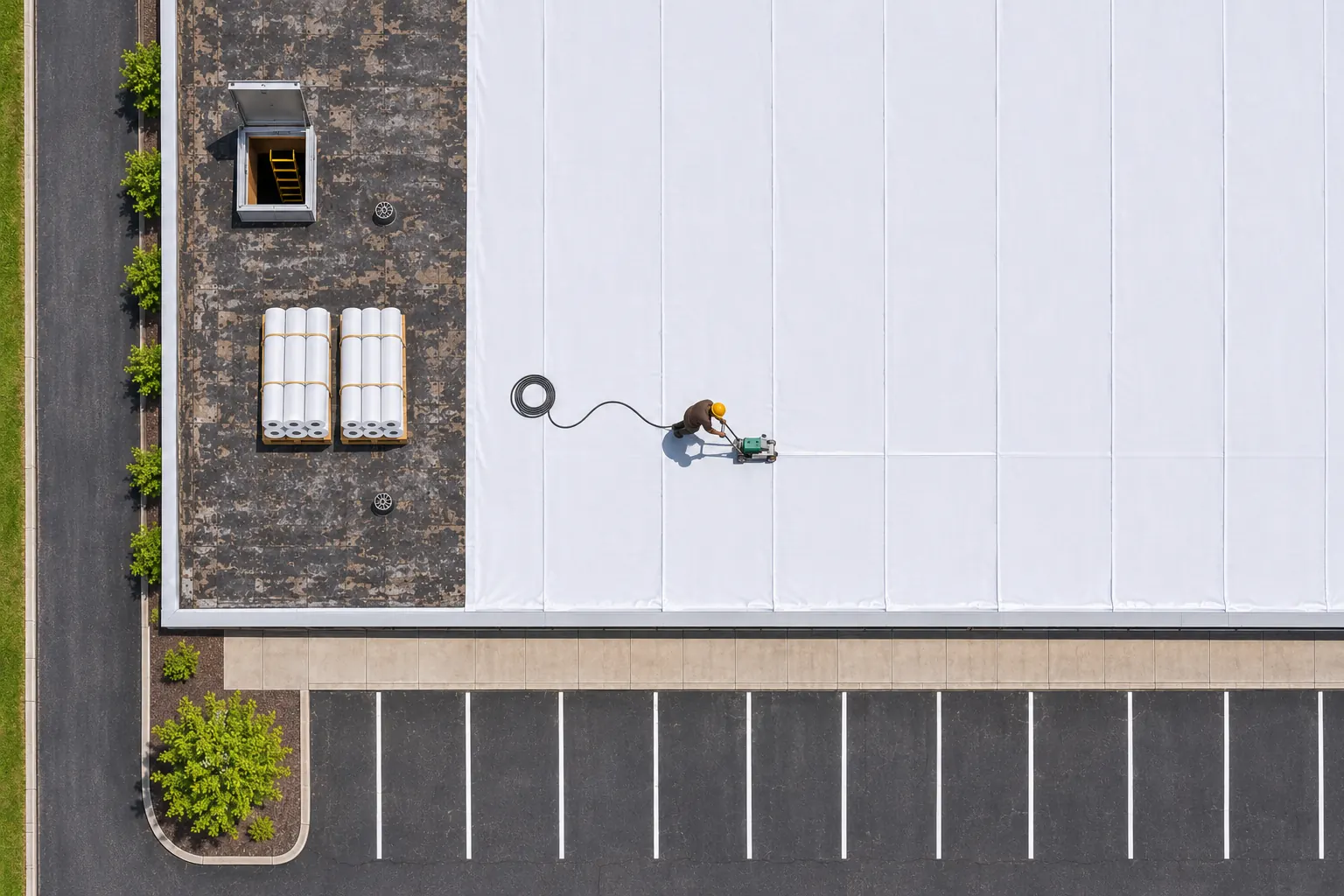
White TPO sheets welded at every seam for retail centers, offices, and labs with low-slope decks and busy rooftop equipment.
TPO Roofing in State College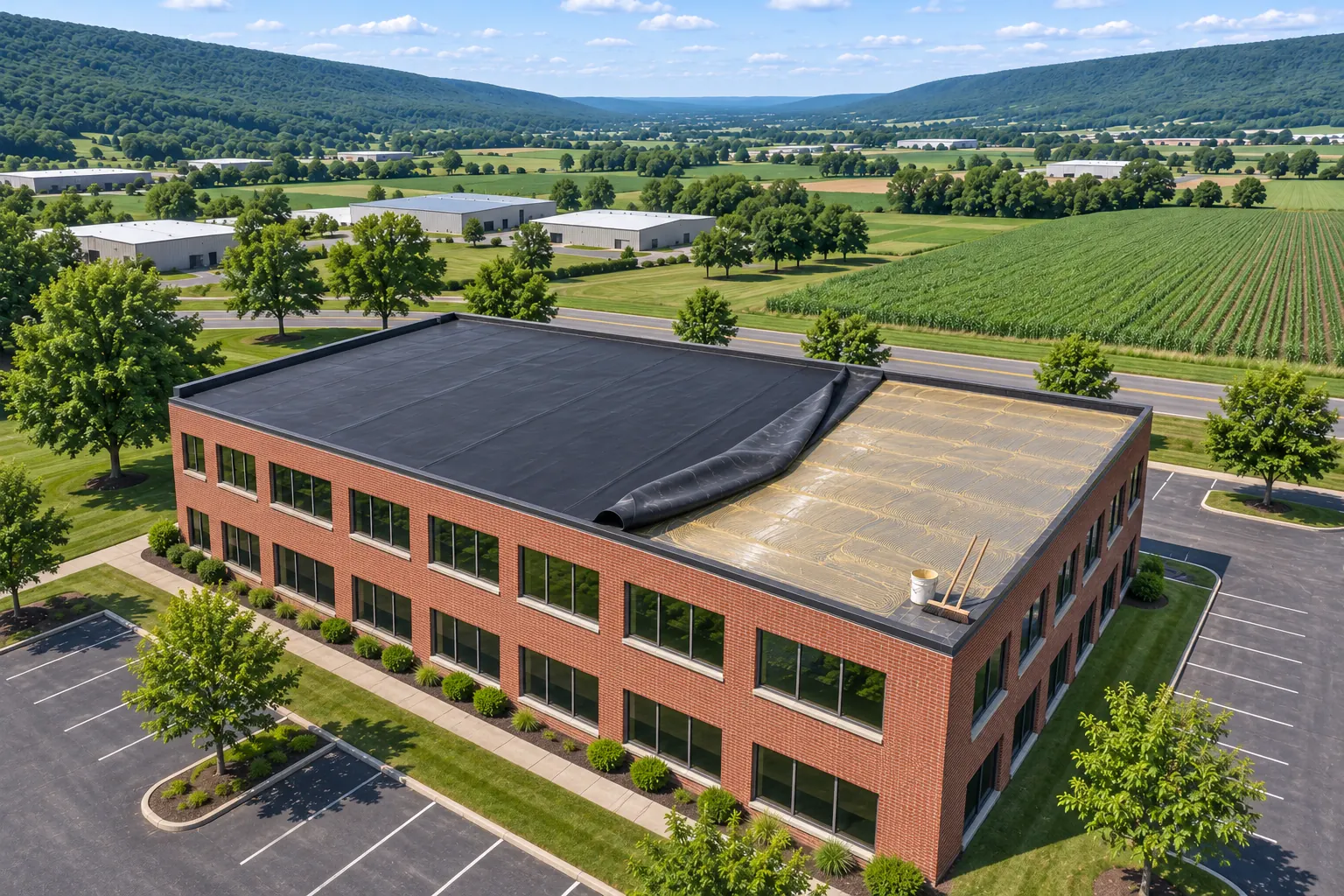
Black EPDM for brick offices and older flat roofs, laid in wide sheets with taped or adhered seams that handle cold well.
EPDM Roofing in State College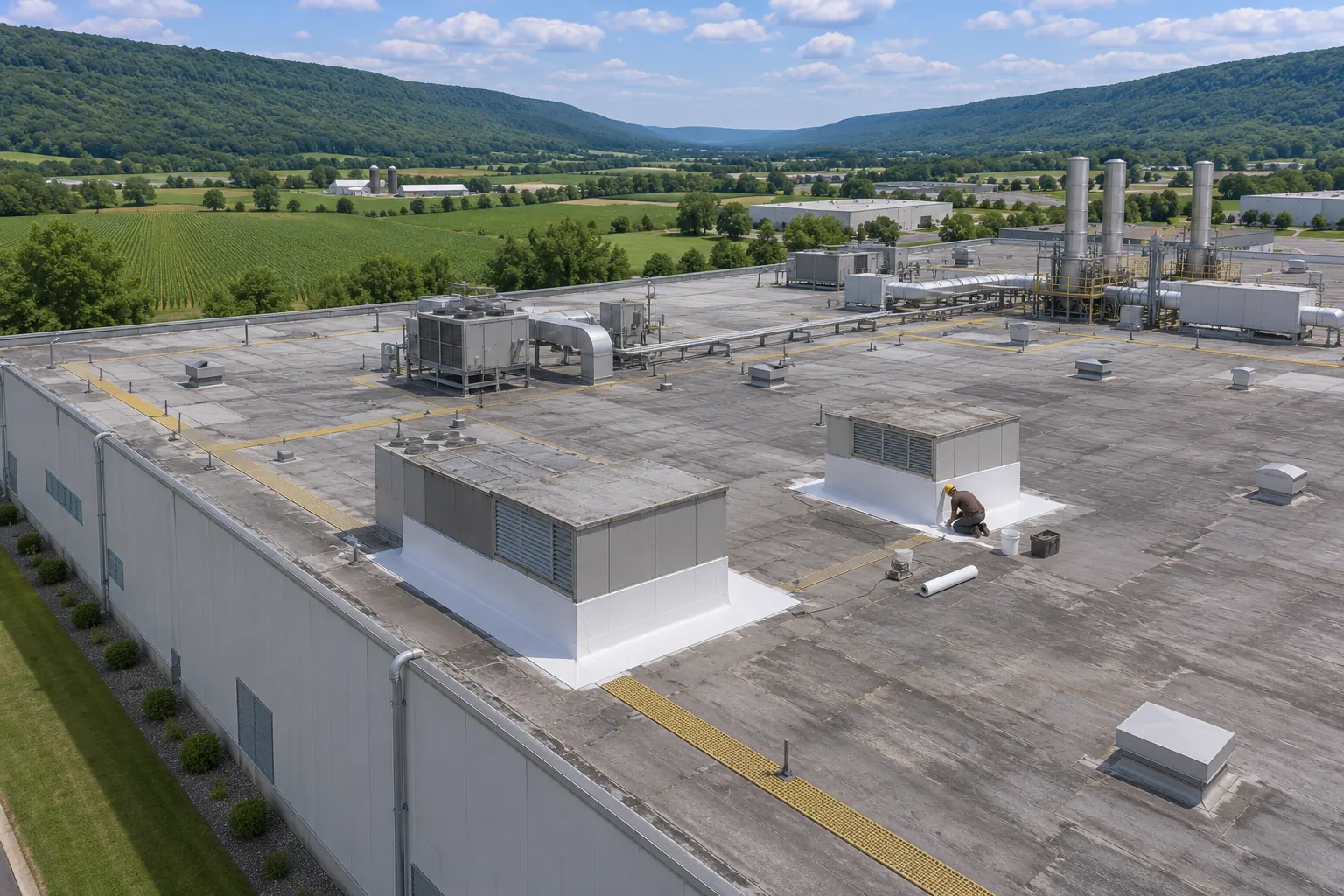
Roof assemblies for plants and research support buildings where stacks, ducts, and curbs crowd the deck and operations stay running.
Industrial Roofing in State College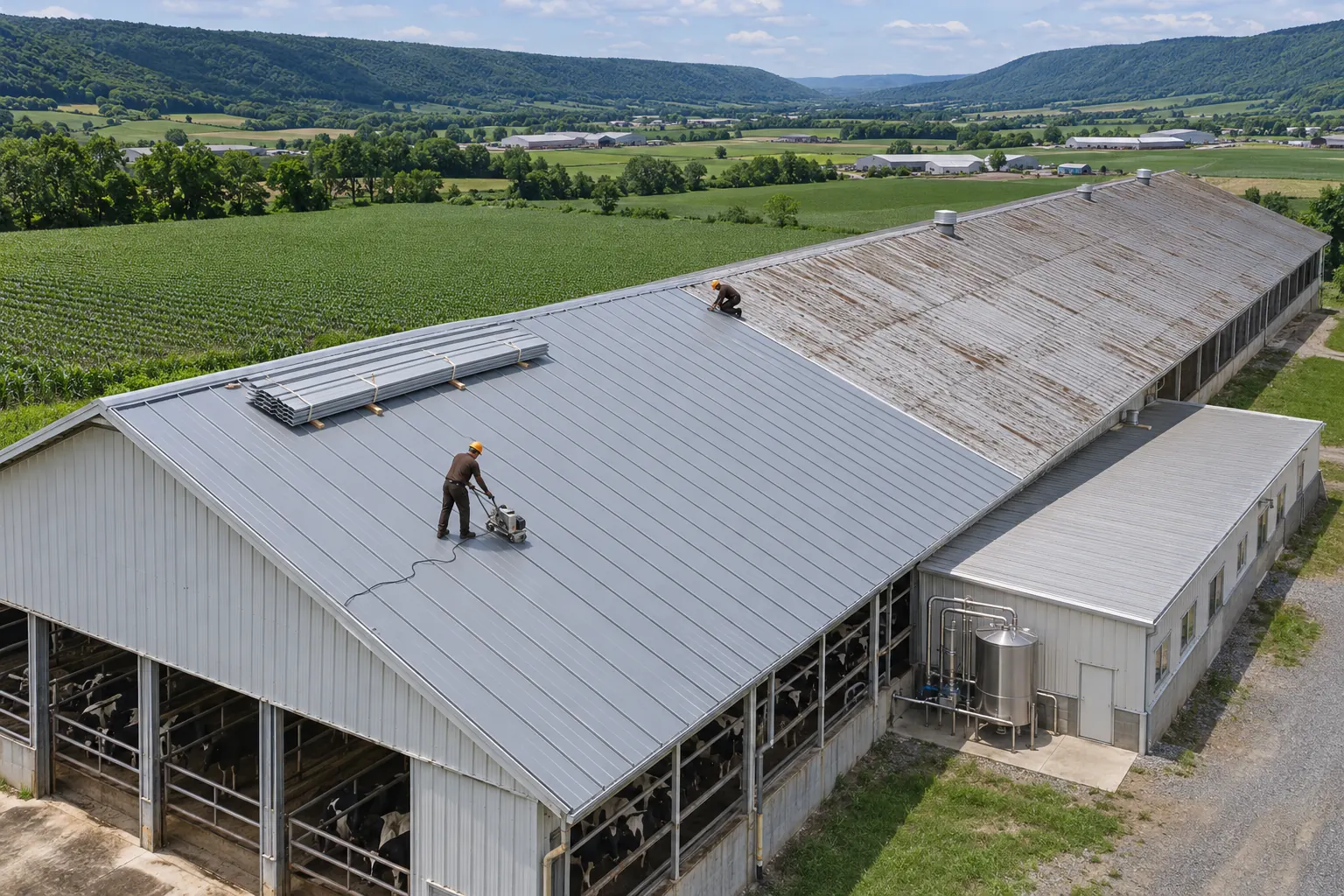
Standing-seam panels for farm buildings, shops, and sloped commercial roofs, with framing checked for heavy wet snow.
Commercial Metal Roofing in State CollegeTell us where the stain is and what the weather did. We set up a roof walk and trace the water to the seam, curb, or drain behind it.
Every reroof follows the same order, from the first roof walk to the last drain test.
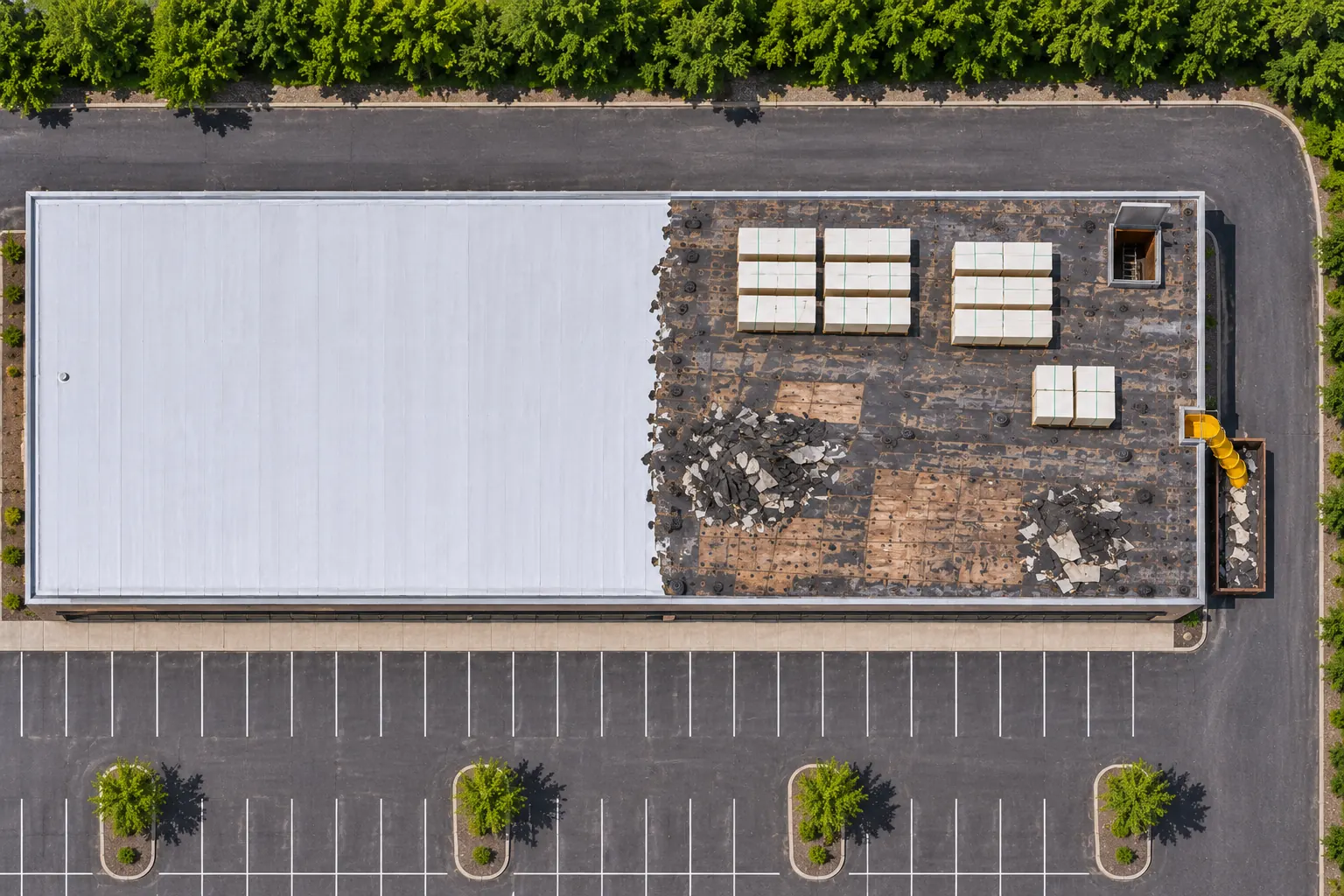
Together we walk the roof, then the ceilings under it, marking every drain, curb, seam, and stain on one sketch.
Small core samples show how many roofs sit on the deck, whether the insulation is wet, and how the old system was attached.
Your proposal names the membrane, insulation, edge metal, flashing, and every layer we remove, so other bids line up beside it.
Crane picks, dumpster spots, and tear-off sections get planned around entrances, research equipment, and delivery hours.
Each section is torn off, insulated, and sealed before the crew leaves, so a passing storm meets a closed roof.
We flood-test drains where needed, walk the finished roof with you, and hand over photos of every detail.
Start with what your roof shows today. Each card points to the job that usually comes first.
Rooftop units, conduit, and exhaust fans need welded flashing that stays tight through service visits.
Shrinking sheets pull at the edges and seams open at the corners, while the deck below often stays dry.
Rust at the laps and loose screws let snowmelt drip onto stalls, equipment, or stored feed.
A single split at a pipe boot on a roof with years left needs a repair visit before any replacement talk.
We replace and install commercial roofs in State College, St. Marys, Lewistown, Bellefonte, Clearfield, and Punxsutawney.
Outside these towns? Call us or send us a message.
Any roof on a building used for business counts, including barns, equipment sheds, and retail centers. Each building still gets its own assembly. We look at the deck, drainage, supports, and equipment before choosing TPO, EPDM, or metal, because a dairy barn and a strip center need very different roofs.
It can, when access and weather protection hold up. Equipment that has to keep running sets the sequence, and opened sections get covered every night. Cold, frost, and wet decks still decide the install days, so a planned window can move when the surface is wet or the adhesive is too cold to set.
Lay the scopes side by side before comparing totals. Check which layers come off, which stay, how much deck repair is allowed for, and what happens at edges, curbs, and drains. A lower bid that skips tear-off or flashing work describes a smaller job.
Yes, they often point to drainage or structure that the new roof has to fix. We look at where ice dams form, how meltwater runs at transitions, and whether a structural engineer should check the framing before heavier insulation or panels go on.
Hail damage gets measured before anyone talks replacement. We check bruised membrane, dented edge metal, and punctures across the roof, then write up the physical findings. Your insurer reads the policy and the cause, while our report covers what the roof shows.
The code office that reviews your building sets the requirements. Pennsylvania works under the Uniform Construction Code, and we describe the layers kept, layers removed, and equipment changes so the review covers the real work.
Send the address and what the roof is doing. We will set up a roof walk and a written scope.